Healing, whether emotional, physical, or spiritual, is rarely, if ever, a straight path; numerous twists and turns are encountered, and we traverse mountains of hardships into valleys of hope.
Each step forward often feels like a journey through an intricate labyrinth, where moments of despair can emerge unexpectedly, only to be followed by glimpses of light.
Along this winding road, we discover not just the resilience of our spirit but also the profound connections we forge with others who share similar struggles. Through this process, we learn that the scars we bear are not merely signs of pain but also badges of courage. They represent our ability to confront life’s challenges and emerge stronger, more compassionate, and ultimately transformed.
Enhancing Resilience Through Coping Strategies
Recent research has shown the significant impact of resilience on healing, highlighting how individuals with higher levels of resilience often experience quicker recovery times and better overall health outcomes. This correlation underscores the importance of cultivating mental and emotional strength, as it not only aids in coping with stress and adversity but also plays a crucial role in physical healing processes. By fostering resilience through various practices such as mindfulness, positive thinking, and supportive relationships, individuals can enhance their ability to navigate challenges, ultimately promoting a healthier and more fulfilling life.

Practical Practices
Some mindfulness practices can help build mental resilience: Regular meditation enhances focus and clarity, aiding navigation through challenges. Deep breathing techniques calm the mind and reduce stress, allowing for thoughtful responses to difficulties. Journaling provides insight into emotions, fostering self-awareness and coping skills. Incorporating mindfulness exercises like walking or yoga promotes a stronger connection to the present, enhancing mental fortitude and emotional stability.
Effective Resilience Practices to Implement
- Mindful Breathing: Take a few minutes each day to focus on your breath. Inhale deeply through your nose, hold for a moment, and then exhale slowly through your mouth. This practice helps center your thoughts and reduce stress.
- Body Scan Meditation: Lie down or sit comfortably and focus on each part of your body, from your toes to the crown of your head. Notice any tension and consciously relax those areas. This can enhance body awareness and help release physical stress.
- Gratitude Journaling: Write down three things you are grateful for each day. This practice shifts your focus toward positivity and resilience in challenging times.
- Mindful Walking: Take a walk and pay attention to the sensations of your feet touching the ground, the sounds around you, and the sights you see. This practice helps ground you in the present moment.
- Loving-Kindness Meditation: Silently repeat phrases of goodwill toward yourself and others, such as “May I be safe, may I be happy.” This fosters compassion and resilience toward difficult situations.
- Progressive Muscle Relaxation: Systematically tense and relax different muscle groups in your body. This technique can help release tension and improve your ability to cope with stress.
- Visualizations: Spend time visualizing a peaceful scene or a successful outcome for a challenge you’re facing. This can help reduce anxiety and improve your overall mindset.
- Daily Reflection: At the end of each day, reflect on what went well and what challenges you faced. This helps you process experiences and learn from them.
- Nature Connection: Spend time in nature and observe the environment around you. Nature has a calming effect and can enhance your overall sense of well-being.
Incorporating these practices into your daily routine can help you build resilience and cope better with life’s challenges. To avoid feeling overwhelmed, start by setting aside just five minutes each day for mindfulness. Gradually increase the time as you get comfortable. Use reminders on your phone to pause and breathe. Integrate short physical activities like stretching or walking into your breaks. Choose one small habit to focus on each week, allowing yourself to progress at your own pace.
Building MY Resilience
Resilience has played an essential part in maintaining my mental health as I navigate chronic illness, allowing me to adapt to the challenges that arise daily; from requiring mobility aids to coping with the pain from my condition, I have developed strategies that foster a sense of stability and hope. One of the most important lessons is not to play the victim. Instead, I must know beyond a doubt that I have agency. I can effect change even if it is a matter of changing my mindset. By embracing a positive attitude and learning to find joy in small victories, I have cultivated an inner strength that empowers me to face the uncertainties of my condition, seek support from loved ones, and remain committed to self-care practices that nurture my well-being.

Meditation’s Role in Building Resilience
Through meditation, I have cultivated profound resilience; leaning into the practice has allowed me to create a profound awareness of the present moment, which opens me to the possibility of change and transformation. This deliberate focus on the here and now nurtures a sense of clarity and peace, empowering me to embrace the potentiality of my body’s innate healing abilities. As I delve deeper into my meditation practice, the layers of stress and tension begin to peel away, revealing a core of strength and vitality that I may have previously overlooked. This connection to my internal resources inspires me to approach challenges with a mindset of openness and adaptability, recognizing that the journey of healing is not linear but rather a rich tapestry woven with patience and self-compassion.
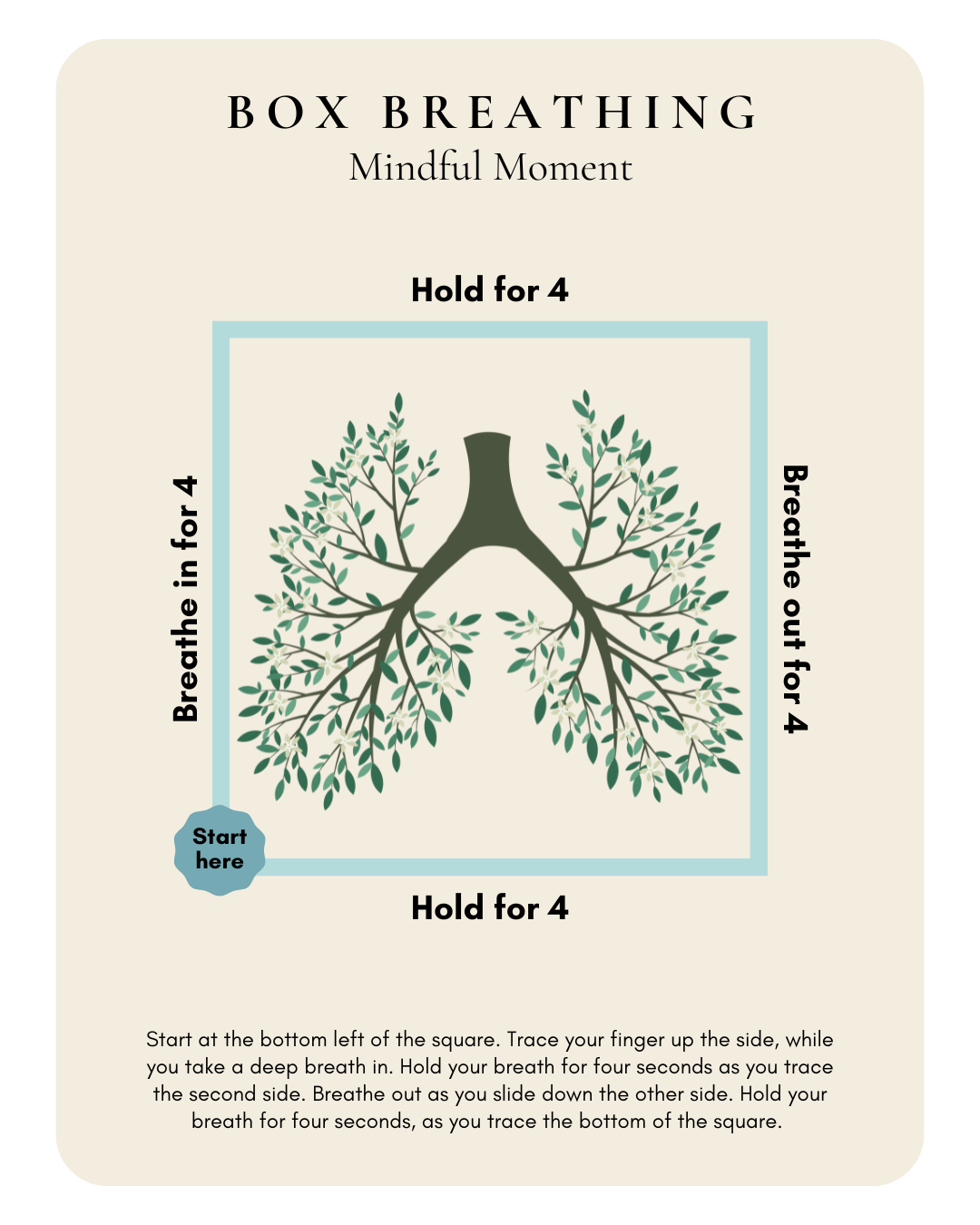
Simple Box Breathing
Here’s one of my simple breathing exercises that you can practice anytime you want to embrace a moment of tranquility and strengthen your resilience:
- Find a Comfortable Position: Sit or lie down in a comfortable position. Close your eyes if it helps you focus.
- Breathe In Slowly: Inhale slowly through your nose, counting to four. Feel your chest and belly expand as you fill your lungs with air.
- Hold Your Breath: Hold your breath for a count of four.
- Exhale Gradually: Exhale through your mouth for a count of four, letting all the air out of your lungs.
- Pause: After exhaling, pause for a count of four before inhaling again.
- Repeat: Continue this pattern for several minutes, focusing on the rhythm of your breath.
Remember, it’s so important to breathe deeply and evenly, allowing your mind to focus just on your breath. This simple act can provide you with a sense of grounding and tranquility. Enjoy your practice! If it helps, feel free to download the graphic to print and support your breathing.
Please visit these links for more information on resilience and learning techniques to aid your journey.
American Psychological Association Resources on resiliency.
Harvard University’s Guide to Resilience
National Library of Medicine: Neurobiology of Resilience
Awareness Meditation
Below, you will find a gentle, guided meditation designed for beginners. This practice invites you to softly shift your awareness to the present moment, helping background chatter fade away as you embrace a sense of calm. It is a nurturing pathway, cultivating the stepping stones towards greater resilience and inner strength.